
How to Chiffonade Basil or Mint
Chiffonade is basil, mint or other flat leaves cut into long, thin strips, mostly as a garnish. Stack the leaves from biggest to smallest, roll them tight like a cigar and slice the roll thin with a sharp knife.


Let me show you how to quickly and easily chiffonade basil or your favorite herb. You can use this technique to decorate your dishes. The photos show basil, but mint works exactly the same way.
Step 1: Stack your basil leaves from biggest to smallest
Take a bunch of fresh basil leaves. Make sure the stems are fully removed. Place the leaves in a stack, starting with the largest ones at the bottom and the smallest ones on top. Make sure they are all facing the same direction, so that they all fit into each other nicely.
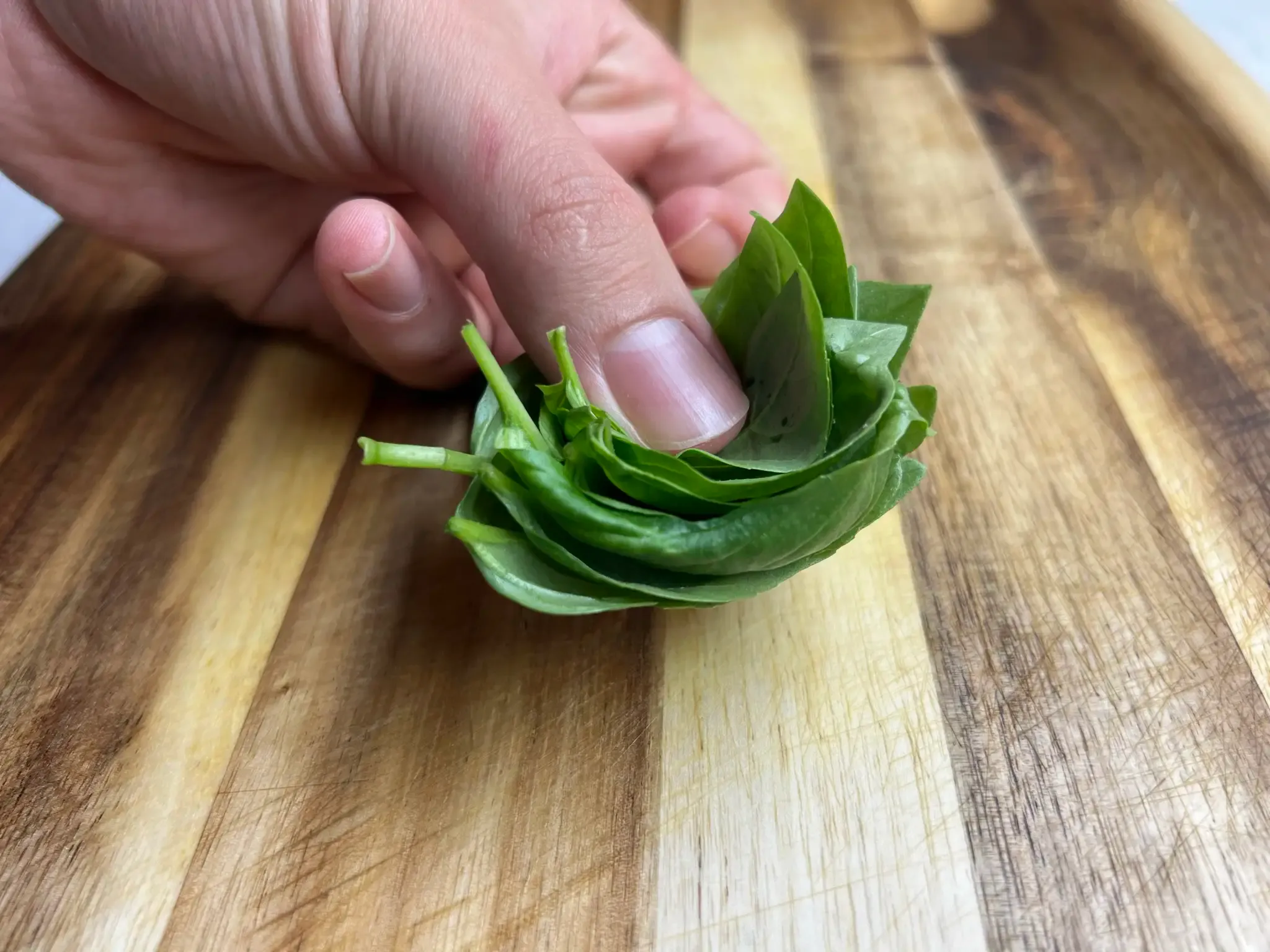
Step 2: Roll the leaves tightly
Start from one of the long sides and tightly roll the basil leaves together. Pretend like you are rolling a cigar or a paper, like we used to do in school. Roll it slowly without losing any of the leaves. This might take a few tries to perfect.
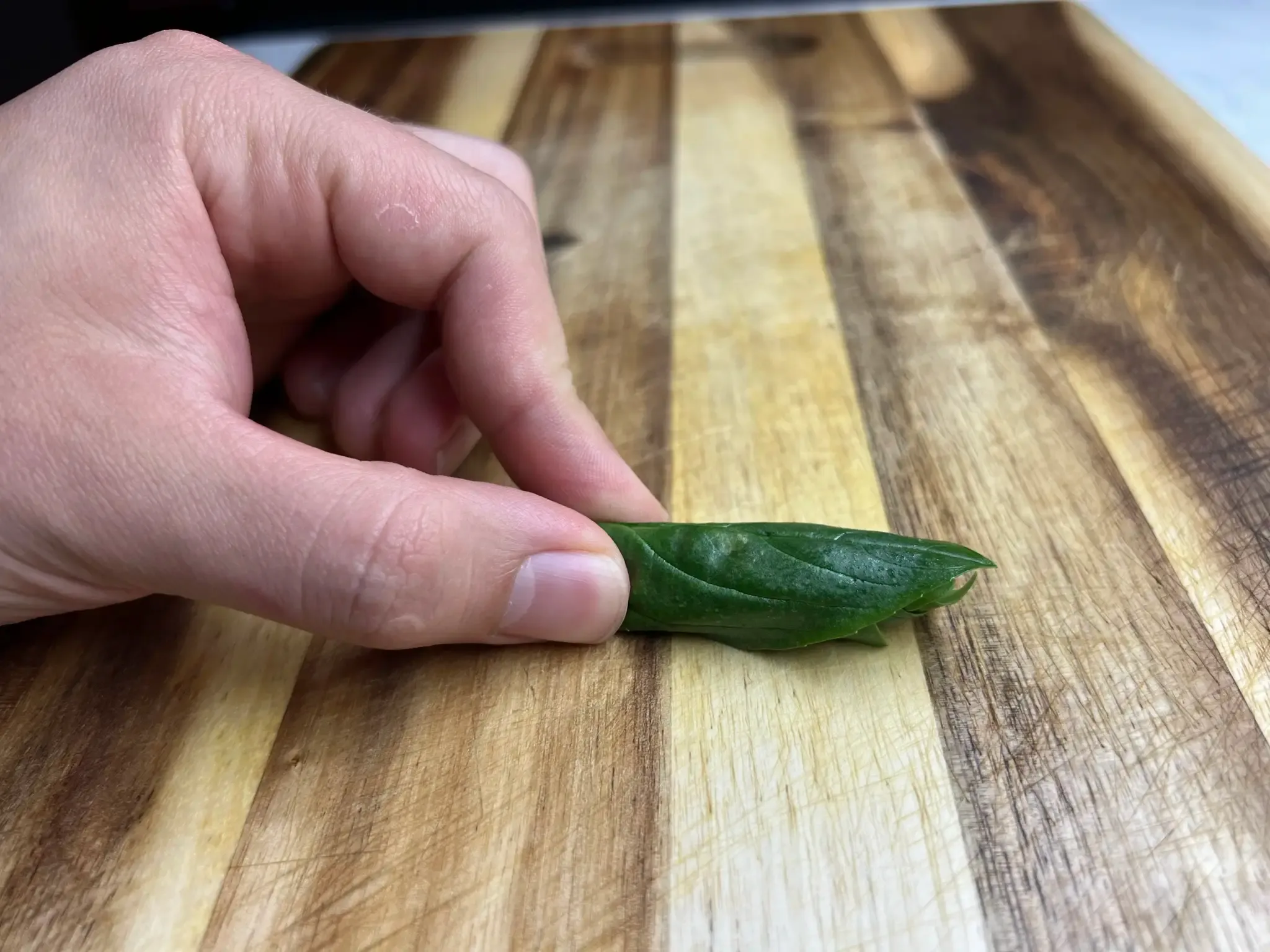
Step 3: Slice the roll thinly and equally
Now it’s time to slice the rolled basil leaves. Using one of the sharpest knives you have, start cutting thin slices from one end to the other. Maintain a slow and steady pace to achieve thin slices, ideally around 5 mm (a little under 1/4 inch) at most. Make sure all the cuts are of the same thickness, otherwise it will look ugly.
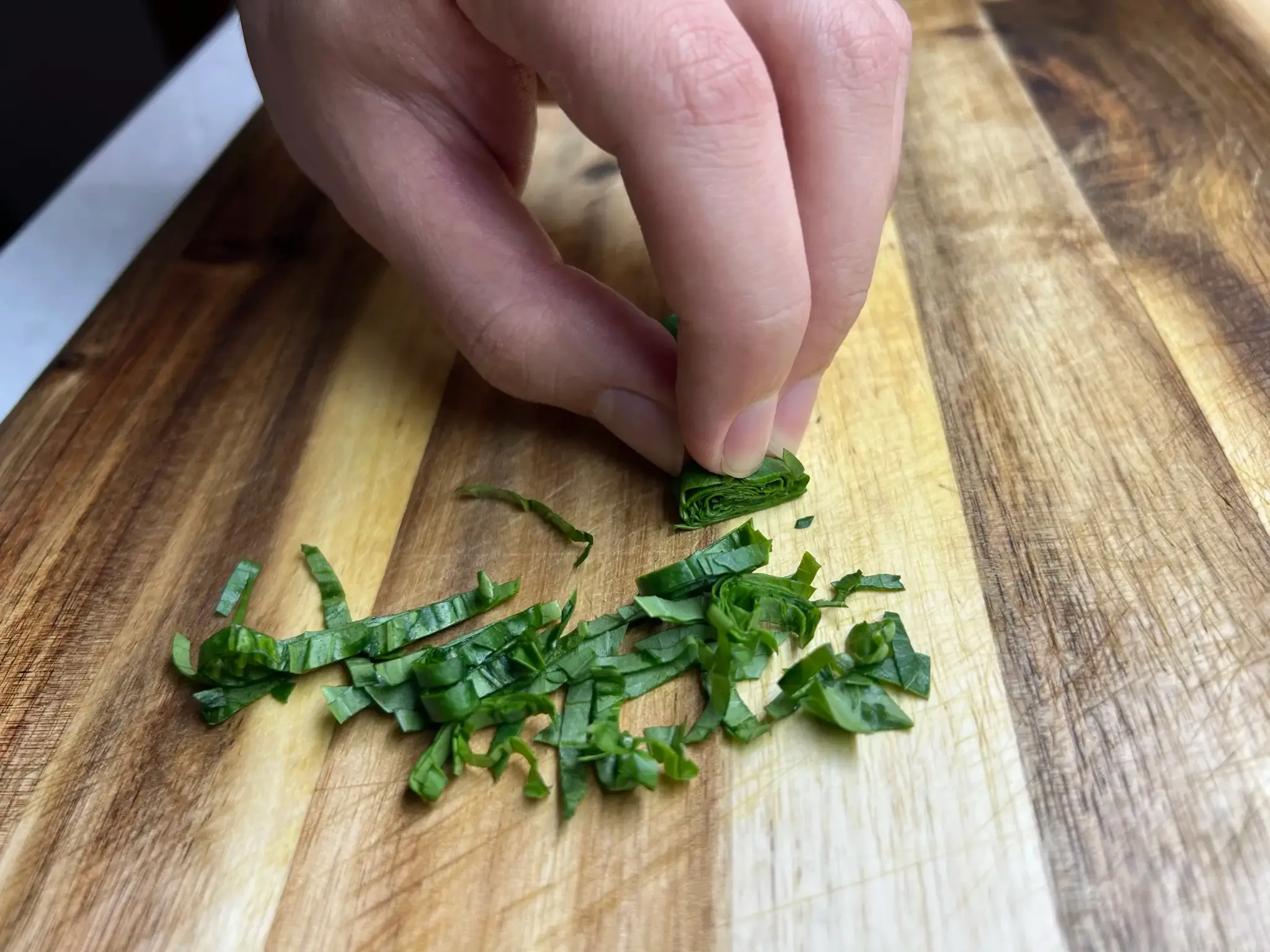
Step 4: Separate the strips of basil
Congratulations! You’ve successfully cut a chiffonade of basil. Separate the cuts of basil or your favorite herb and use them in your recipe.
That’s it, a quick and simple tutorial on creating chiffonade.
Why use a sharp knife?
A sharp knife cuts through the leaves cleanly. A dull one crushes them, and crushed basil turns dark faster. Even a clean cut darkens after a while, so cut basil right before it goes on the dish.
Where to use it
Use it as a basil garnish for pasta, in salads or on top of soups.
In my watermelon feta salad, both the basil and the mint are cut into strips this way. For my cucumber yogurt salad, the mint leaves get stacked together and cut thinly. It works for spinach too, like the thin strips of spinach in the filling of my byrek.
Check out this other trick on how to finely chop onion.
Questions
What is basil chiffonade?
Basil cut into long, thin strips, like ribbons. The name comes from chiffon, the French word for rag. It works with mint and other flat leaves too, and it is mostly used as a garnish.
How do you chiffonade mint?
The same way as basil. Pull the leaves off the stem, stack them together, roll them up and slice them thin.
How thin should a chiffonade be?
There is no official size, and cooking guides don't agree on one. I go for around 5 mm (a little under 1/4 inch) at most. What matters more is that all the strips are the same width.
Can you chiffonade basil ahead of time?
It's best cut right before you use it, because the cut edges turn dark. If you have to, keep it in an airtight container in the fridge for a day or two. A little oil on the cut basil slows the darkening, but it makes the basil a bit oily.
What else can you chiffonade?
Flat, leafy greens work best, like spinach, Swiss chard or sorrel. Parsley, cilantro and thyme leaves are too small to roll, so chop those instead. For my tabbouleh, the parsley gets chopped really thin.
What is the difference between chiffonade and julienne?
Julienne cuts vegetables into thin matchsticks, about 1/8 inch (3 mm) thick. Chiffonade is for leaves. You roll them up and slice them into ribbons.
How do you pronounce chiffonade?
Shif-uh-NAHD or shif-uh-NAYD. Merriam-Webster lists both, with the stress on the last syllable.