Skip to content
0

How to make Crème Brûlée Donuts

Crème brûlée donuts are soft fried donuts filled with vanilla bean pastry cream, the tops dipped in caramel that cracks like a crème brûlée. My viral recipe and one of my staples. About 4 hours, half of it rising.

Jump to the recipe
A crème brûlée donut held up in two hands, its glossy caramel top catching the light, over a board of caramel and chocolate donuts

This is my viral recipe of crème brûlée donuts. It got over 20 million views on Instagram and Facebook, and it’s one of my staples. It’s essentially a donut that you fill with pastry cream and then cover with burnt sugar, so it becomes like a crème brûlée.

Now you might ask where it comes from. It’s my own recipe, and it’s a derivative of petulla, which is pretty much Albanian fried dough. So it’s kind of like an American, French and Albanian petulla in one. You can find crème brûlée donuts at some bakeries too, but this is how I make mine.

Here is the recipe, and if you like videos better, here is my video.

Why it’s called crème brûlée

Crème brûlée is French for “burnt cream”. The classic one is a custard with a layer of sugar on top, caramelized with a torch until it turns hard. That’s the crust you crack with a spoon. Here is my crème brûlée for beginners if you want the original. On these donuts there’s no torch. The burnt sugar is a caramel, and the tops get dipped straight into it.

The pastry cream

The filling is a vanilla pastry cream, the same kind of cream that goes in my eclairs. The pastry cream photos here are from my eclairs video. The eclair batch is smaller and has a little flour in it. This one is thickened with cornstarch only.

Some tips for this one. I use whole milk only, because I think it makes it creamier. I use real vanilla beans, because they make a huge difference in taste. And I let it chill fully before it goes in the donuts.

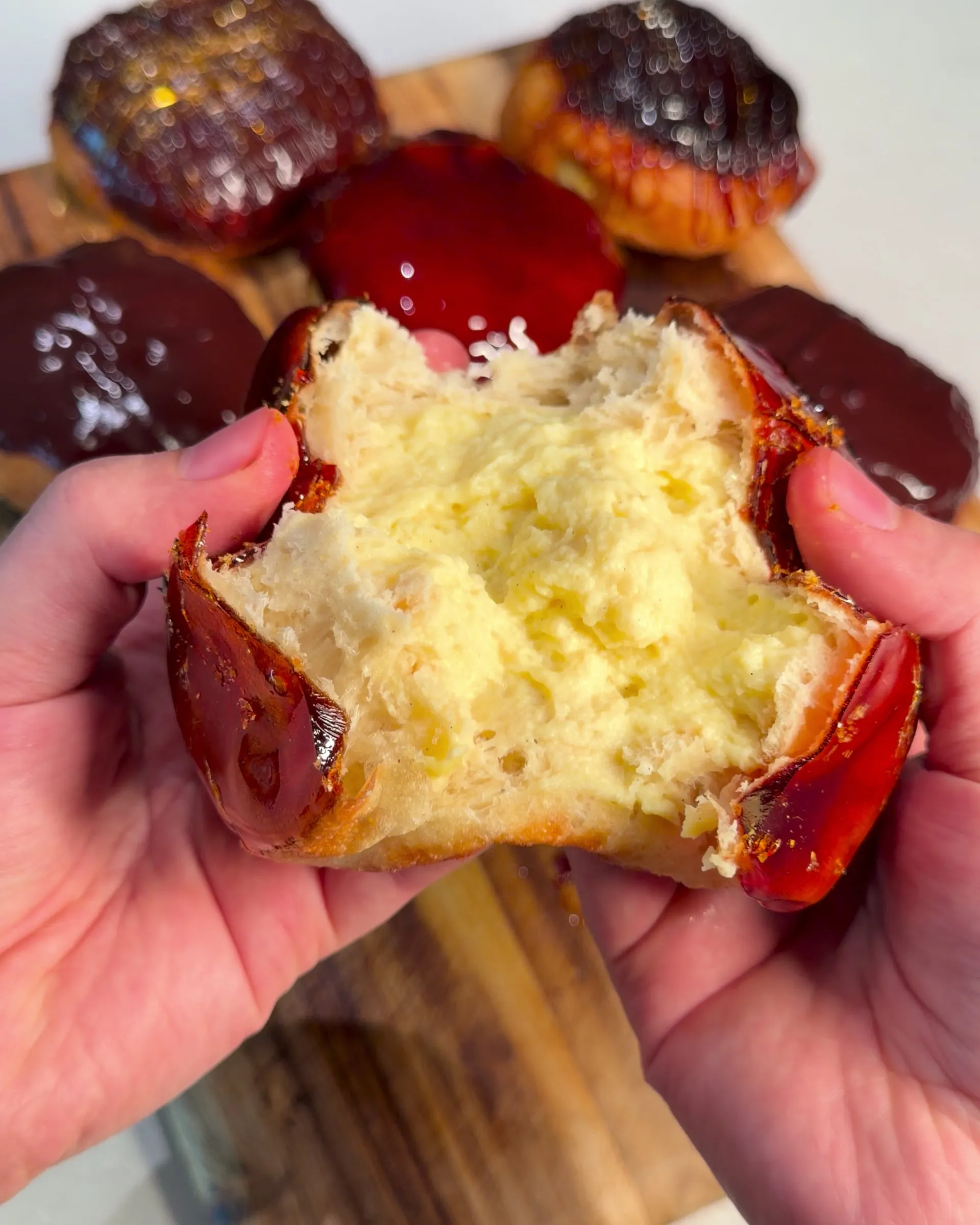
Hands pulling a crème brûlée donut open to show the vanilla pastry cream inside, its caramel shell broken at the edges

The caramel

The caramel is only sugar, water and a little lemon juice, which is there so the sugar doesn’t crystallize. Once sugar goes past 300°F (150°C), the hard crack stage, it sets hard and brittle as it cools. That’s the shell. Around 340°F (170°C) it turns brown and starts to taste like caramel, and above about 350°F (175°C) it starts to burn and turns bitter.

Be careful with this part. At that temperature caramel is a lot hotter than boiling water, so it can burn your fingers. That’s why the donut gets turned over as soon as it comes out of the pan.

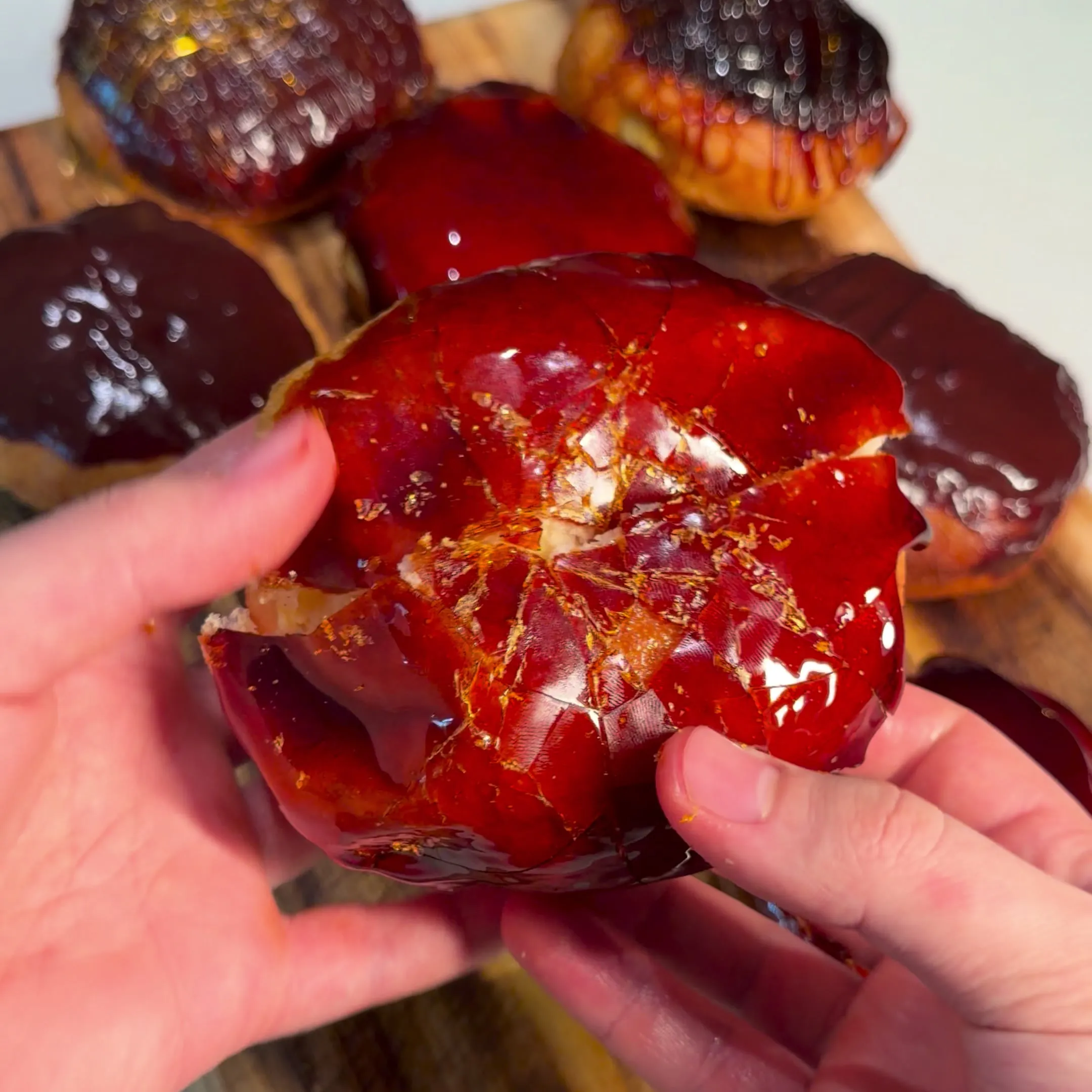
Hands pressing a crème brûlée donut so its caramel top cracks into shards

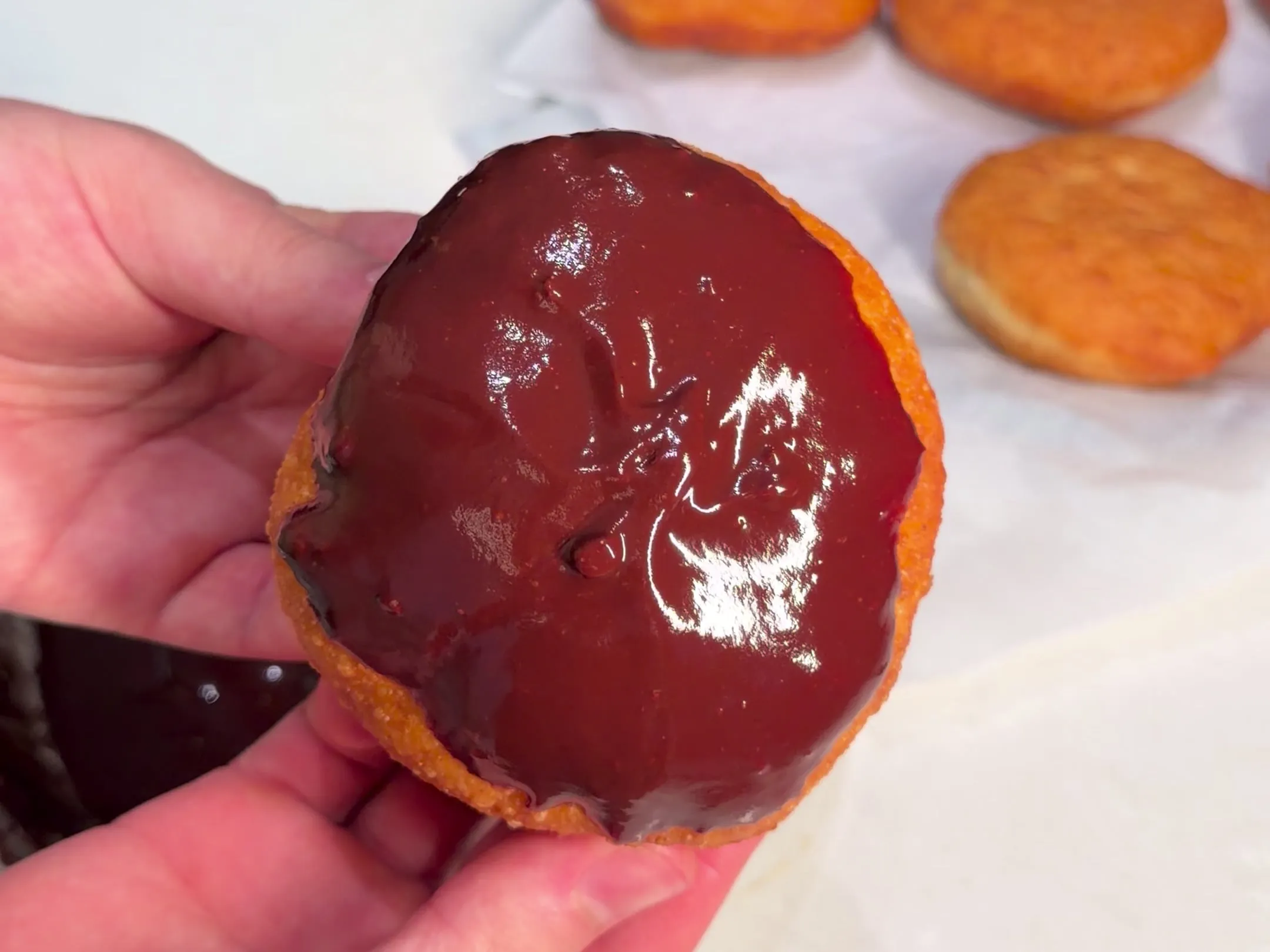
Boston cream donuts

You can also dip the tops in chocolate instead of caramel, and they become Boston cream donuts. Boston cream is a yeast donut with a custard filling and a chocolate top, and the official donut of Massachusetts. For the chocolate, you can use the icing from my eclairs, which is chocolate chips, butter and milk melted in a bain-marie. Make twice the eclair amount, because the donut tops are bigger.

A fried donut held up with its top dipped in glossy melted chocolate, plain fried donuts on paper behind

Leftover egg whites

The pastry cream only uses the yolks, so you’ll have 10 egg whites left. Don’t throw them away. My Cipriani meringue cake uses exactly 10.

Dessert AmericanFrenchAlbanian

How to make Crème Brûlée Donuts

Crème brûlée donuts are soft fried donuts filled with vanilla bean pastry cream, the tops dipped in caramel that cracks like a crème brûlée. My viral recipe and one of my staples. About 4 hours, half of it rising.

Prep time
1 hr 15 min
Cook time
45 min
Rise
2 hr 10 min
Total time
4 hr 10 min
Servings
20 donuts
Calories
420 kcal
Course
Dessert
Cuisine
American, French, Albanian
Cooking for
20 donuts
Units

As written.

Ingredients

0 of 19 ticked

Donuts

  • Have a vanilla bean?

    Use one real vanilla bean instead of the extract. Split it, scrape out the seeds and add them with the milk.

Vanilla pastry cream

  • No vanilla beans?

    If you can’t get vanilla beans, use 1 tablespoon of pure vanilla extract per bean, stirred in when the cream comes off the heat.

Caramel

You'll need

  • Stand mixer (with the dough hook)
  • Large bowl (for the rise)
  • Rolling pin
  • Small bowl or round cutter (to cut the rounds)
  • Baking trays (lined with parchment paper)
  • Plastic wrap
  • Saucepan (for the pastry cream)
  • Whisk
  • Deep skillet or heavy pot (for frying)
  • Thermometer (for the oil and the caramel)
  • Spoon and tongs (to baste, flip and lift the donuts)
  • Cooling rack (with paper towels)
  • Piping bag (with a metal tip)
  • Small saucepan or skillet (for the caramel)
  • Pastry brush (for the sides of the caramel pan)

Instructions

  1. Make the dough

    • In the bowl of a stand mixer, add the flour, the sugar, the yeast, the salt and the nutmeg.
    • Add the eggs, the warm milk (about 100°F (38°C)), the melted butter and the vanilla.
    • Mix with the dough hook until it all comes together into a soft, smooth dough.
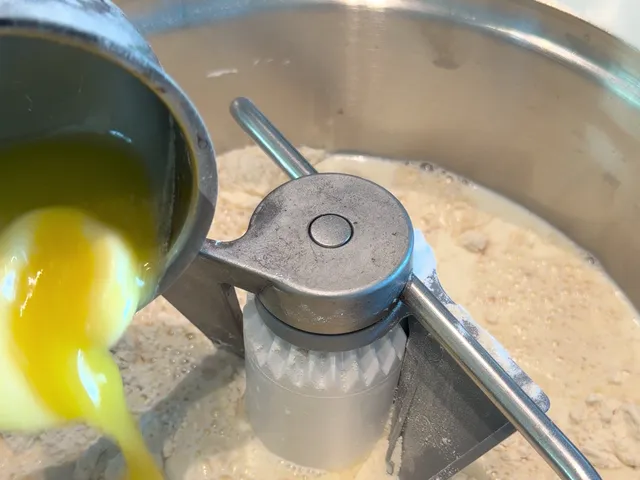
    Melted butter pouring into the stand mixer bowl, over the flour and the milk
    • You need
    • 6 cups all-purpose flour
    • ½ cup sugar
    • 1 tbsp instant yeast
    • 1 tsp salt
    • ½ tsp ground nutmeg
    • 2 large eggs
    • 2 cups milk
    • ¼ cup butter
    • 2 tsp vanilla extract
  2. Let it rise

    • Shape the dough into a ball and put it in a large bowl.
    • Cover it with plastic wrap and let it rise for about 1 ½ hours, until it has doubled.
    • An hour works too, but I usually give it the full hour and a half.
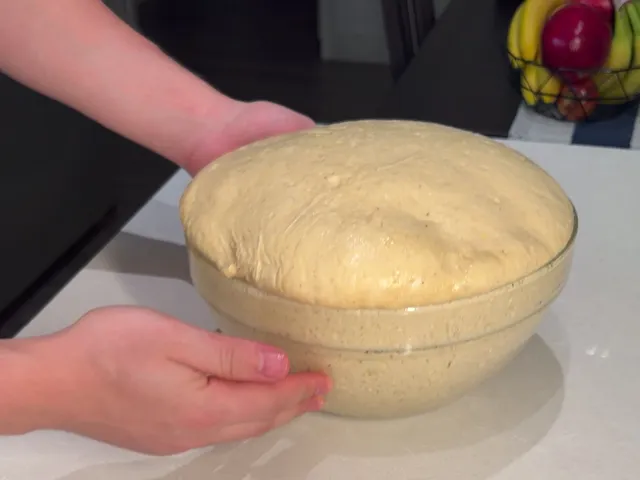
    Hands holding a glass bowl of risen donut dough, domed above the rim
  3. Start the pastry cream

    • While the dough rises, let’s make the pastry cream, so it has time to cool.
    • Split the vanilla beans lengthwise and add them to a saucepan with the whole milk.
    • Bring it almost to a boil, then take it off the heat and let it rest, so the milk takes in the vanilla.
    • Meanwhile, in a bowl, whisk together the egg yolks, the sugar and the cornstarch.
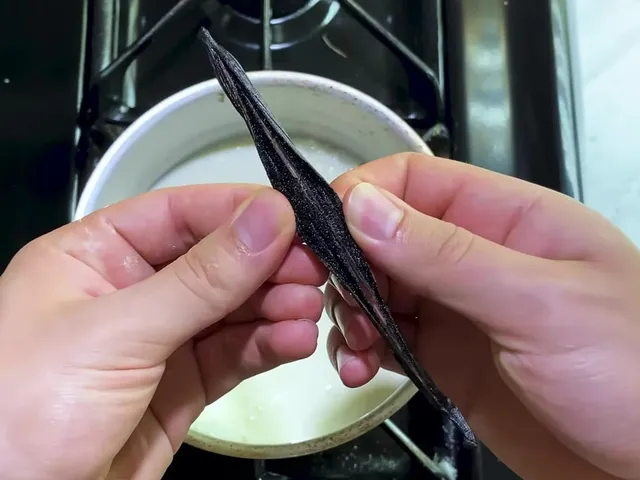
    Hands holding a split vanilla bean over a saucepan of milk on the stove
    • You need
    • 4 ¼ cups whole milk
    • 2 vanilla beans
    • 10 egg yolks
    • 1 cup plus 2 tbsp sugar
    • ½ cup cornstarch

    New to this? How to Separate Egg Yolks from Egg Whites

  4. Cook the pastry cream

    • Scrape the seeds out of the vanilla beans into the milk and take the pods out.
    • Slowly pour the hot milk into the yolks, whisking the whole time, so it doesn’t cook the eggs.
    • Once it’s all in, pour everything back into the saucepan and cook it over medium heat, whisking constantly.
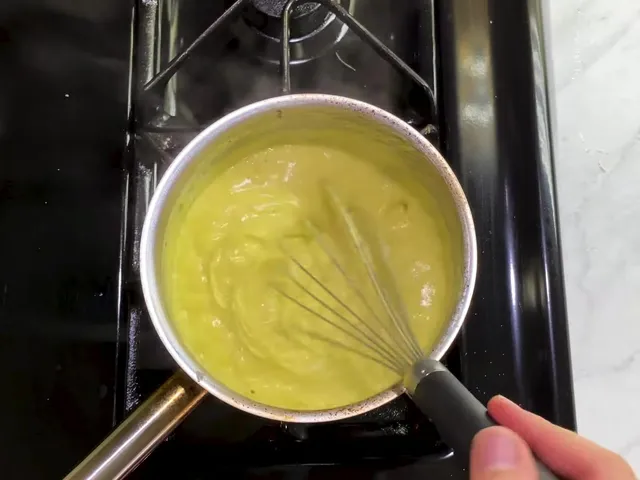
    • It’s done when it comes to a thick boil and you can see the patterns of the whisk in the cream.
    • Keep cooking and whisking for 1 more minute, to get rid of the cornstarch flavor.
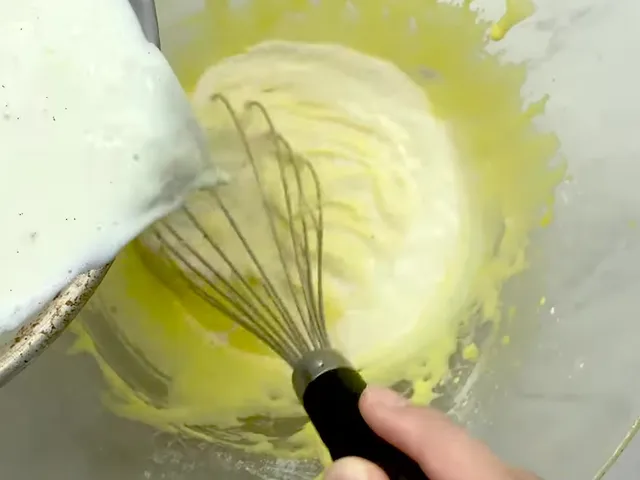
    Hot milk pouring into whisked egg yolks in a glass bowl, a little at a time Thick yellow pastry cream in a saucepan on the stove, with the whisk leaving trails

    See the whisk patterns? It’s done.

  5. Butter, cover and chill

    • Take it off the heat and right away stir in the cold butter until it melts in.
    • Pour it into a bowl and cover it with plastic wrap, pressed so it touches the surface. Otherwise a skin forms on top.
    • Chill it until it’s completely cold, a few hours in the fridge.
    • To speed it up, set the bowl in a bigger bowl of ice water (a cold bain-marie).
    • You need
    • 7 tbsp unsalted butter

    Wrap touching the cream, or it gets a skin.

  6. Roll it out

    • Once the dough has risen, sprinkle some flour on your counter and turn the dough out.
    • Press it out with your hands, then roll it into a sheet about ½ inch thick.
    • Try to keep it as even as you can, so the donuts fry evenly.
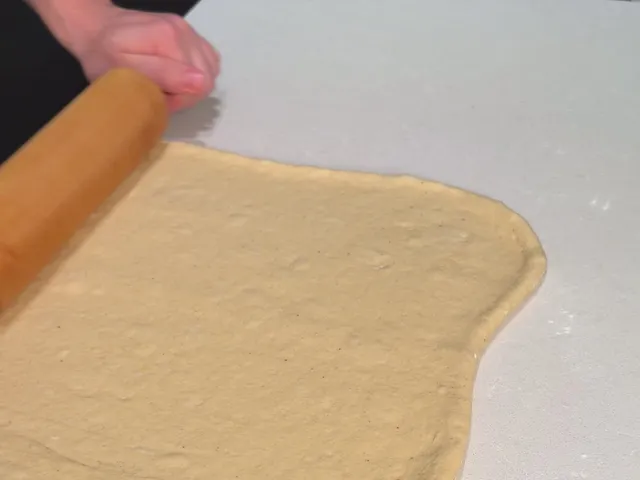
    A rolling pin at the edge of an even sheet of donut dough on a floured white counter
  7. Cut the rounds

    • I use a small bowl to cut the circles, but you can use a round cutter if you have one.
    • Adjust the rounds with your hands if they lose their shape, and put them on trays lined with parchment paper.
    • Press the scraps back together, roll them out again and cut a few more.
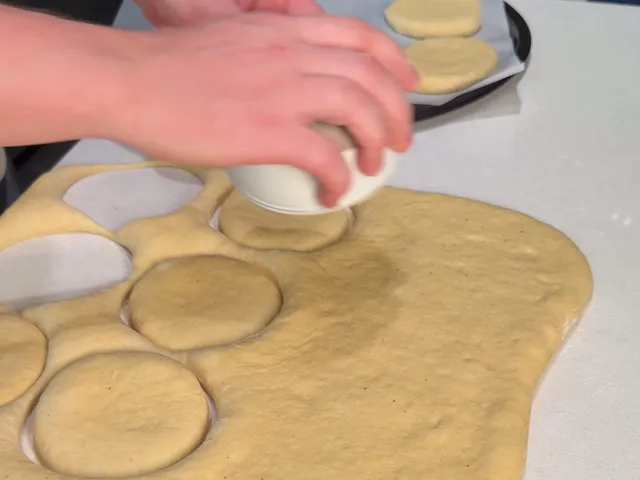
    Cutting circles out of the dough sheet with an upside-down small white bowl, with cut rounds on a tray behind
  8. Let them rise again

    • Cover the rounds with plastic wrap and let them rest for about 40 minutes.
    • This lets them rise again, so they get puffy.
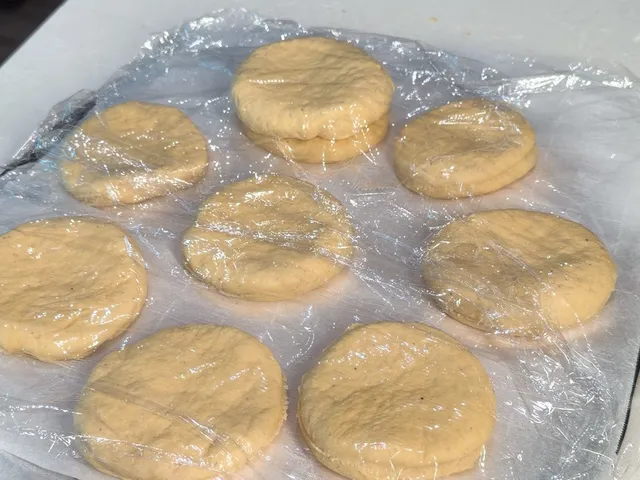
    Rounds of donut dough on parchment paper, covered with plastic wrap
  9. Heat the oil

    • Pour enough oil into a deep skillet or a heavy pot for the donuts to float.
    • Heat it over medium heat to 350°F (175°C), and check it with a thermometer.
    • Keep checking it between batches, because the temperature drops every time the donuts go in.
    • You need
    • neutral oil

    Never leave the hot oil alone.

  10. Fry the donuts

    • Lower them into the oil away from you, 2 or 3 at a time, so the pan isn’t crowded.
    • Spoon some of the hot oil over the tops while the bottoms fry.
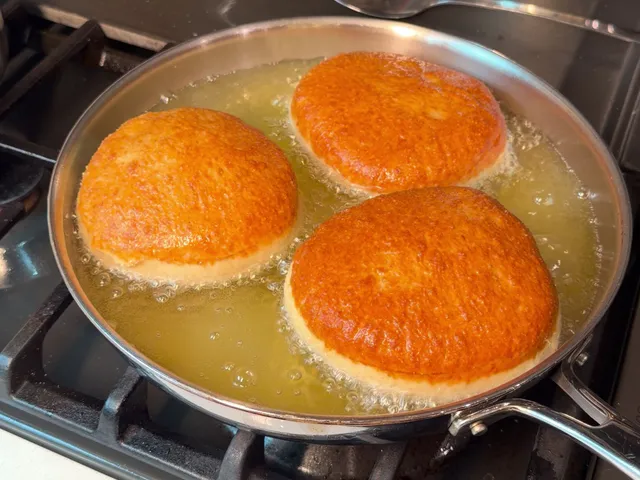
    • Flip them once the bottoms are deep golden, after about 1 to 1 ½ minutes, and fry the other side the same way.
    • Tear the first one open to check that the middle is cooked.
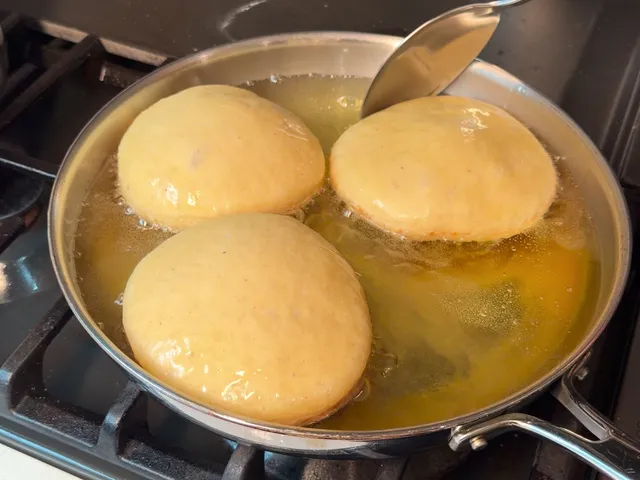
    Three pale donuts frying in a stainless steel skillet, with a spoon dipping into the oil to baste them Three deep golden donuts frying in a stainless steel skillet of oil on a gas stove
  11. Let them cool

    • Move the donuts to a cooling rack and let them cool completely.
    • An extra tip here, I add some paper towels, so they absorb some of the oil the donuts pick up while frying.
  12. Fill them

    • Put the cold pastry cream in a piping bag.
    • Push the tip into the side of each donut and squeeze until it feels full and heavy.
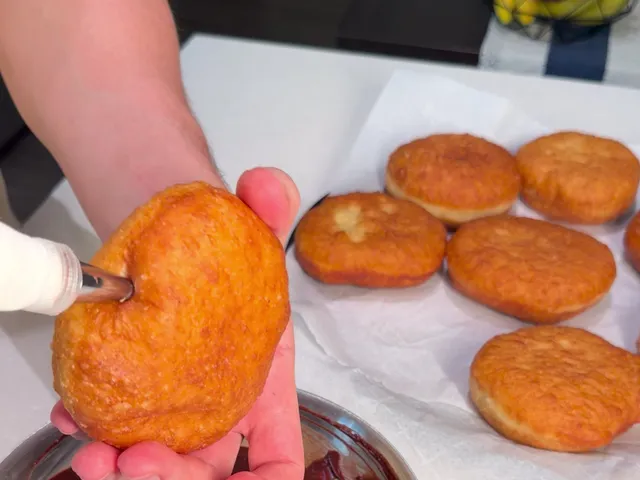
    Pushing a piping tip into the side of a fried donut held in one hand, with more fried donuts on paper behind
  13. Make the caramel

    • In a small saucepan or skillet, add the sugar, the water and the lemon juice.
    • Stir over medium-high heat only until the sugar dissolves, then stop stirring.
    • From here on, swirl the pan instead, and brush down any sugar on the sides with a wet pastry brush.
    • Once it turns amber, about 340°F (170°C), take it off the heat. It keeps darkening in the hot pan, so don’t wait.
    • If it gets too thick while you dip, warm it for a moment over the lowest heat.
    • You need
    • 2 cups sugar
    • 1 cup water
    • 1 tsp lemon juice

    Stop stirring once the sugar dissolves.

  14. Dip the tops

    • Hold a filled donut by the bottom and dip just the top into the caramel.
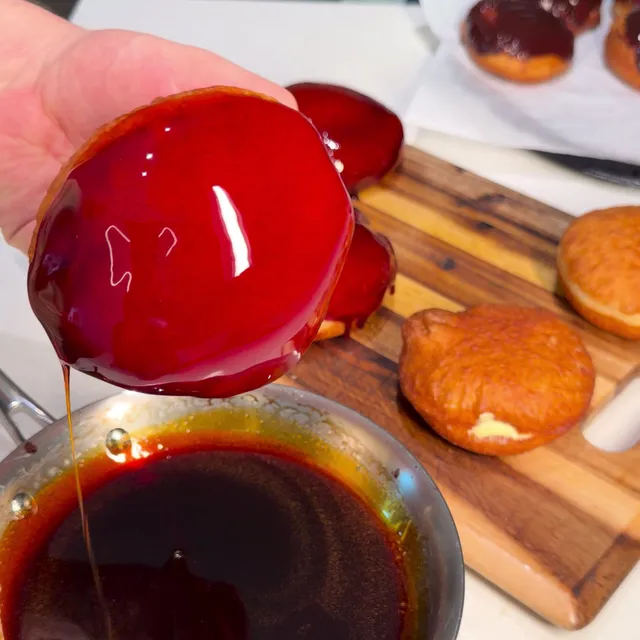
    • Lift it, let the extra drip off for a second, then quickly turn it over, so it doesn’t burn your fingers.
    • Set it down top up and let it rest until the sugar has hardened.
    • And this is how you make crème brûlée donuts.
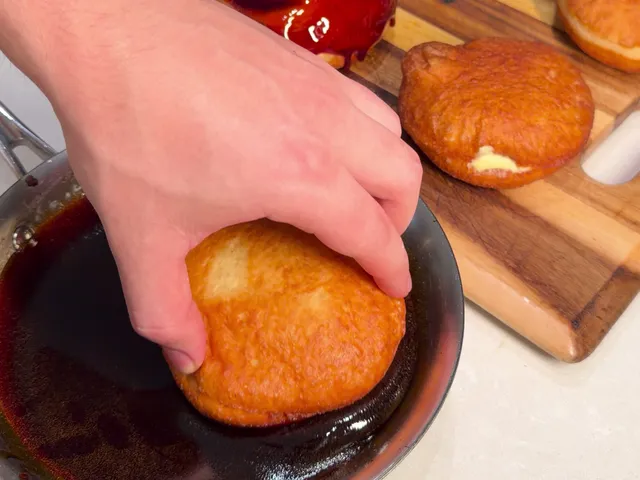
    Pressing the top of a filled donut into a skillet of dark caramel A donut lifted out of the caramel, its top glossy, with a thread of caramel dripping back into the skillet

    Hot caramel burns. Keep a bowl of ice water close.

Nutrition per serving

Calories
420 kcal
Protein
8 g
Fat
12 g
Carbs
70 g
Fiber
1 g
Sugar
40 g
Sodium
180 mg

Estimated from USDA FoodData Central, without ground nutmeg (optional, but highly recommended), neutral oil (for frying, like peanut, canola or vegetable), vanilla bean, water.

Ju bëftë mirë!

Watch the video Save on Pinterest

Video

Rather watch me do it?

The whole recipe, start to finish, is on my channel. Subscribe and the next one finds you.

Questions

Questions about how to make crème brûlée donuts

What is a crème brûlée donut?

A soft fried yeast donut, filled with vanilla pastry cream, with the top dipped in caramel. The caramel sets hard and glassy, like the top of a crème brûlée, so it cracks when you bite into it.

How long does it take to make crème brûlée donuts?

About 4 hours. Two of them are the dough rising, and the pastry cream chills during that time. The frying, filling and dipping take about an hour.

How do you make the crème brûlée topping for donuts?

With a caramel dip, so you don’t need a torch. Cook sugar, water and a little lemon juice until it’s amber, about 340°F (170°C). Dip just the top of each filled donut, then turn it over. Caramel past 300°F (150°C) sets hard as it cools, so it cracks.

Why did my caramel crystallize?

Usually because it was stirred, or sugar crystals on the sides of the pan fell back in. Swirl the pan instead of stirring, and brush the sides with a wet pastry brush. The lemon juice helps too.

How long does the caramel top stay crunchy?

It’s at its best right after it sets. The caramel slowly loses its crunch as it sits, and in the fridge it turns sticky. Dip the tops as close to serving as you can, and eat them within an hour or two.

Do crème brûlée donuts need to be refrigerated?

Yes, because the pastry cream is made with milk and egg yolks. Don’t leave them out for more than 2 hours (1 hour if it’s above 90°F/32°C). In the fridge they keep up to 3 days, counted from the day you made the pastry cream, but the top turns sticky.

Can you make crème brûlée donuts ahead of time, or freeze them?

Partly. The pastry cream keeps up to 3 days in the fridge, covered. Fry and fill the donuts on the day. They can wait in the fridge for a few hours, but dip the tops right before serving. Don’t freeze the pastry cream or the filled donuts.

How many calories are in a crème brûlée donut?

About 420 calories per donut, with 20 donuts in the recipe, from USDA data. That counts all of the caramel, even though some stays in the pan, but not the oil they soak up while frying.

Goes with

What else goes on the table

Your turn

Did you make it?

5 out of 5, from 1 cook.

Your rating
Tap a diamond to rate it.

  1. Miles

    you finally shared the recipe. I've been seeing these donuts all over my instagram.

Show me the inside

Take the photo and tag @xhuliocooks on Instagram so I can see how yours turned out.