
Skip to content
0

How to make Salt Bread (Butter Rolls)

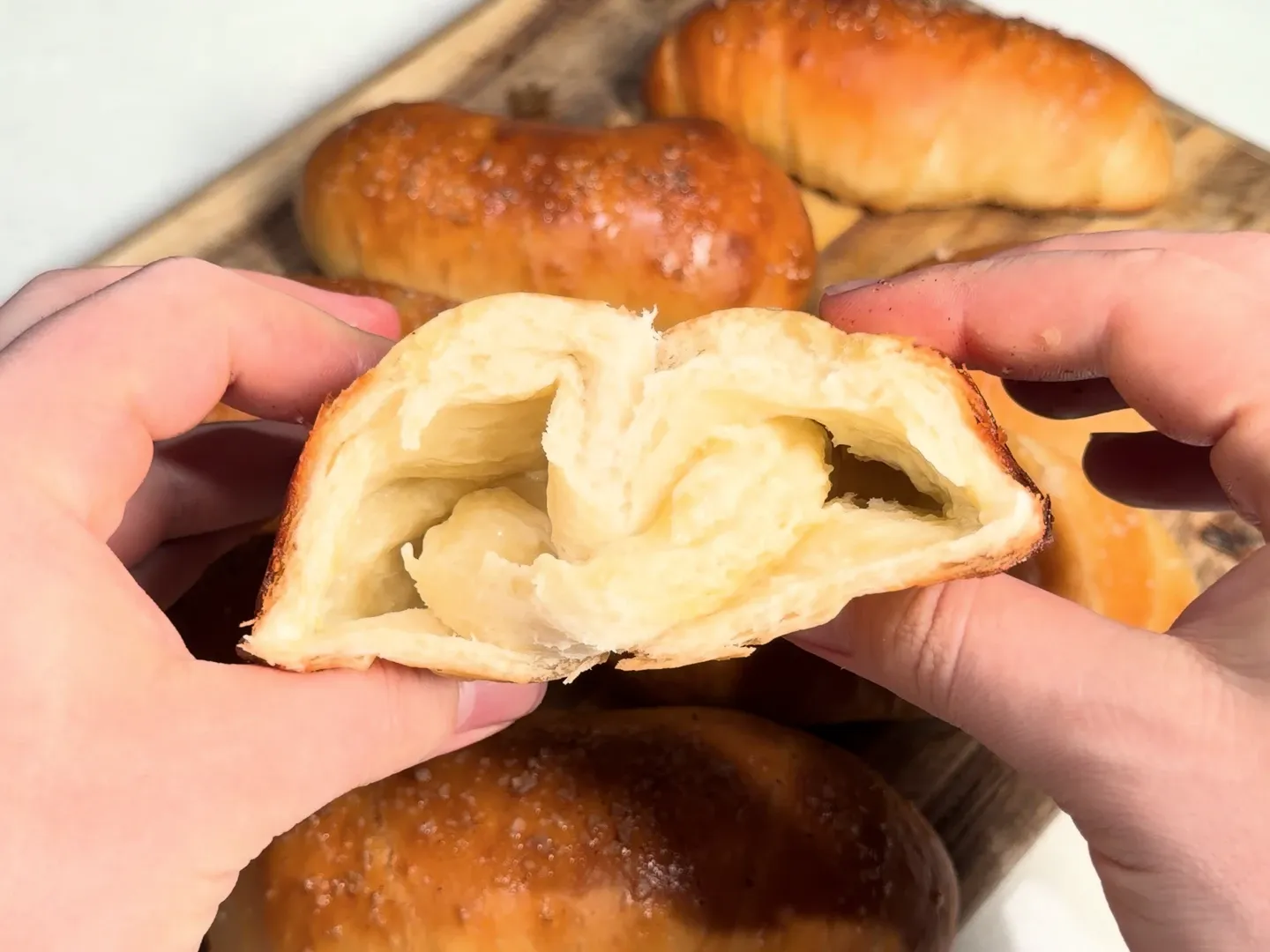
Salt bread (my butter rolls) is a soft roll baked around salted butter, with flaky salt on top. The butter melts, leaves it hollow and fries the bottom crisp. About 5 hours, most of it rising.

Jump to the recipe
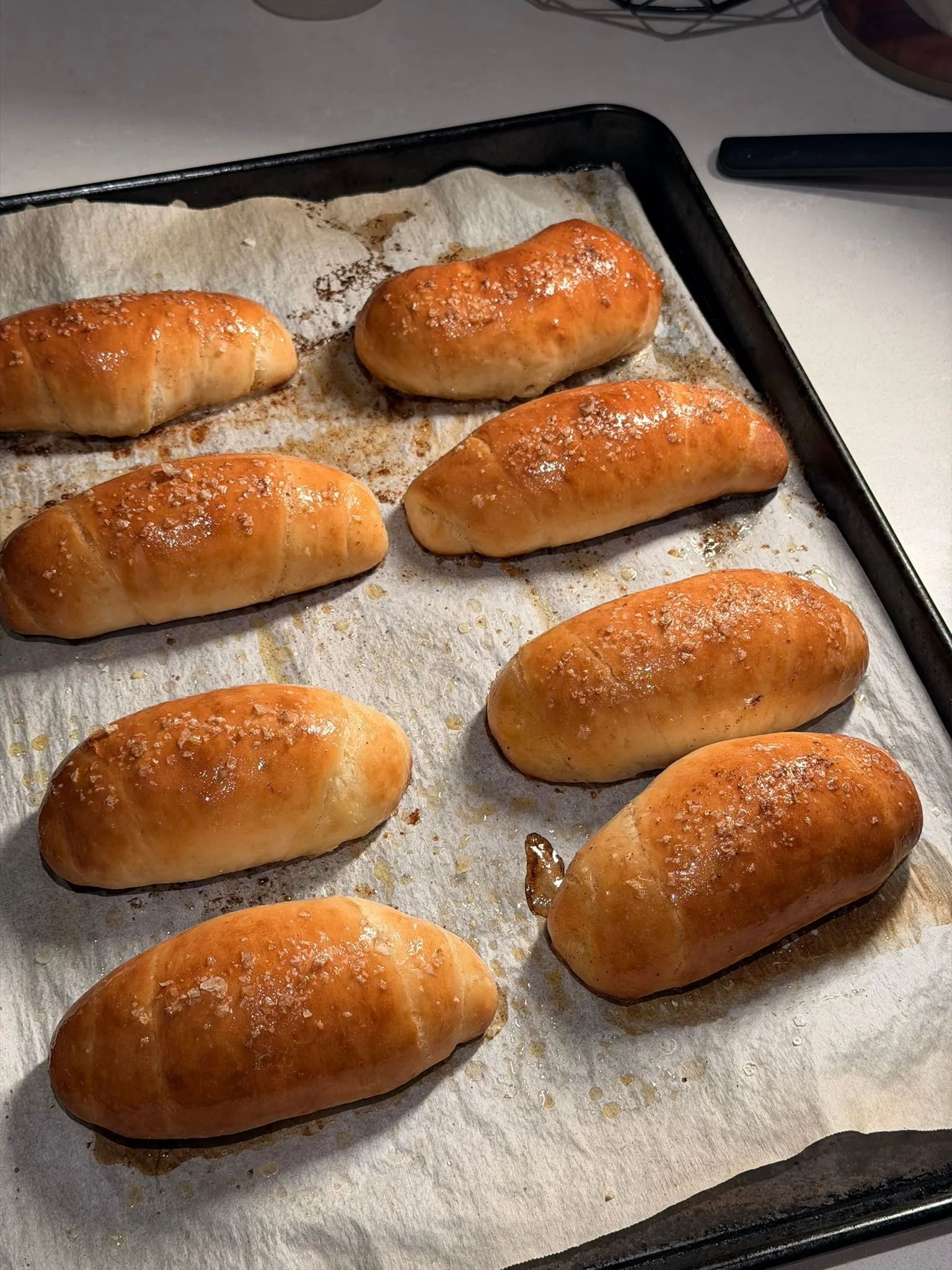
Golden salt bread rolls shiny with butter and topped with flaky salt, on parchment paper

These butter rolls, also called salt bread, were all over my feed, and I knew I had to make them, considering Albanians love bread.

Here is the recipe, and if you like videos better, here is my video.

Two hands holding a baked roll torn open, showing the soft, hollow inside, with more rolls on a wooden board behind

Where salt bread comes from

Salt bread comes from Japan, where it’s called shio pan. It’s usually traced to Pain Maison, a bakery in Yawatahama, in Ehime Prefecture. The story goes that its founder was inspired by German salted bread and wanted a lighter bread for the summer. From Japan it went to Korea, where it got really big.

The butter

There’s butter in the dough and a tablespoon more inside each roll, and I used salted butter for both. When some of it leaks out in the oven, that’s a good thing. It’s what gives you a bottom like this one.

A whole baked roll held up in two hands, showing its deep brown, shiny bottom

The salt and the water

The flaky sea salt on top adds a little crunch. The water goes on first, and it helps the crust bake a little crispier.

Eight golden salt bread rolls with flaky salt on a parchment-lined baking sheet

More bread and dough

If you like baking bread at home, try my bagels or my pita bread for gyros. For something Albanian, there are my petulla, which are pretty much fried dough.

Breakfast Japanese

How to make Salt Bread (Butter Rolls)

Salt bread (my butter rolls) is a soft roll baked around salted butter, with flaky salt on top. The butter melts, leaves it hollow and fries the bottom crisp. About 5 hours, most of it rising.

Prep time
50 min
Cook time
20 min
Rise
4 hr
Total time
5 hr 10 min
Servings
8 rolls
Calories
400 kcal
Course
Breakfast
Cuisine
Japanese
Cooking for
8 rolls
Units

As written.

Ingredients

0 of 10 ticked

Dough

  • Only have all-purpose flour?

    It works, and the rolls come out a little softer. Hold back about 60 g of the water and add it back a tablespoon at a time only if the dough feels stiff. It may need a few more minutes of kneading.

Filling and topping

You'll need

  • Kitchen scale (the dough is all in grams)
  • Large bowl
  • Spatula
  • Plastic wrap
  • Bench scraper or knife
  • Rolling pin
  • Baking sheet (lined with parchment paper)
  • Spray bottle (for the water)
  • Pastry brush
  • Stand mixer (optional, I knead it by hand)

Instructions

  1. Mix the dry ingredients

    • Add 520 g bread flour, 25 g sugar, 12 g salt and 7 g instant yeast to a large bowl.
    • Stir them together with a spatula.
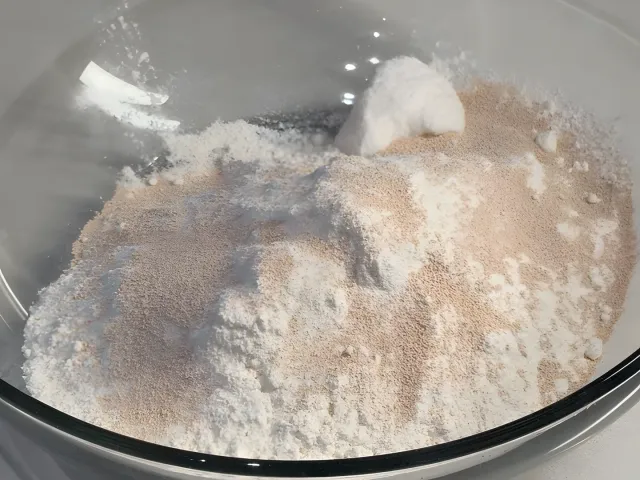
    Flour heaped in a glass bowl, with yeast granules sprinkled over it and a small white mound on top, before mixing
    • You need
    • 520 g bread flour
    • 25 g sugar
    • 12 g salt
    • 7 g instant yeast
  2. Add the cold water and milk

    • Pour in 200 g cold water and 175 g cold milk.
    • Mix with the spatula until there’s no dry flour left and you have a shaggy dough.
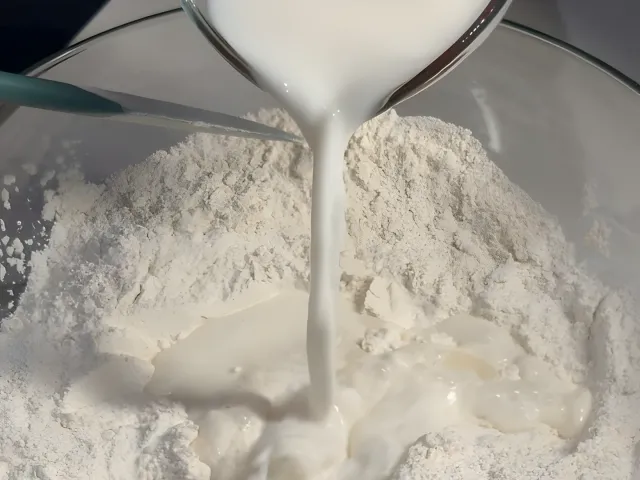
    Milk pouring from a jug into a well in the flour in a glass bowl, with a teal spatula resting in the bowl
    • You need
    • 200 g cold water
    • 175 g cold milk
  3. Knead

    • Knead the dough with your hand, right in the bowl, until it feels homogeneous.
    • By hand, all the kneading takes 10 to 15 minutes. A stand mixer with the dough hook is faster.
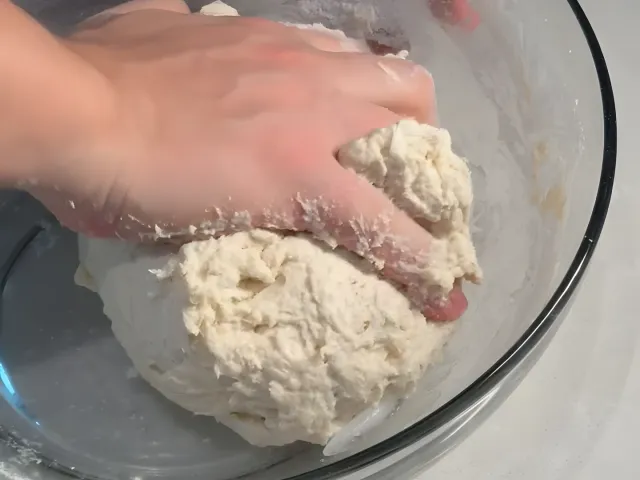
    One hand pressing into a lumpy ball of dough in a glass bowl while the other hand steadies the rim
  4. Add the butter

    • As soon as the dough feels homogeneous, add 40 g salted butter.
    • Keep kneading until the butter is completely worked in.
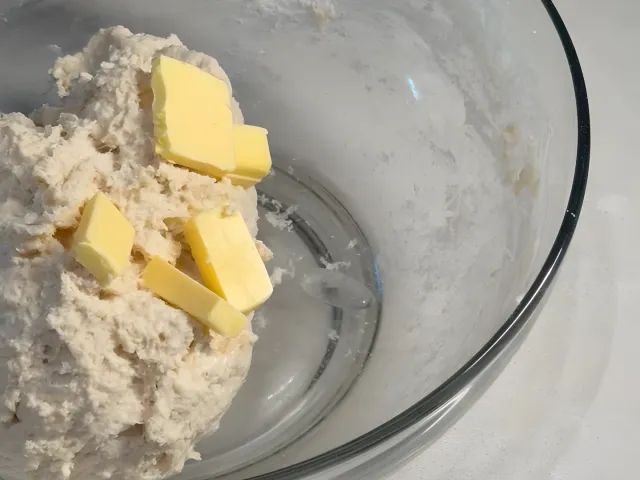
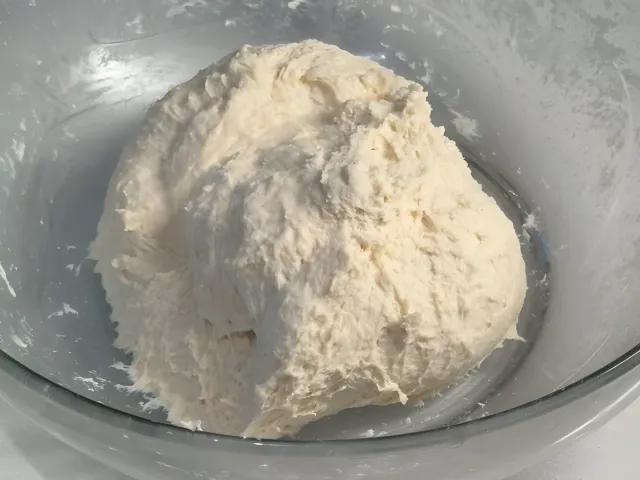
    Five pieces of pale yellow butter resting on top of a shaggy dough in a glass bowl A ball of kneaded dough, still a little rough on top, in a glass bowl
    • You need
    • 40 g salted butter
  5. Chill it

    • Cover the bowl with plastic wrap and put it in the fridge for 1 hour.
  6. Stretch, fold and shape a ball

    • Take the dough out of the fridge.
    • Grab one side, stretch it up and fold it over the middle. Do the same from the other sides.
    • Then tuck the dough under itself into a smooth ball.
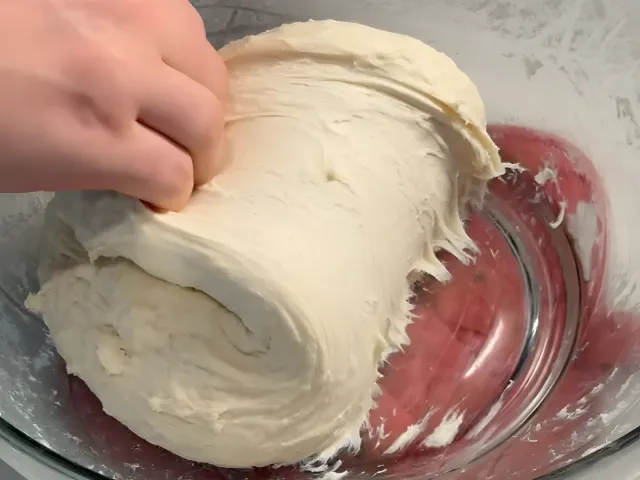
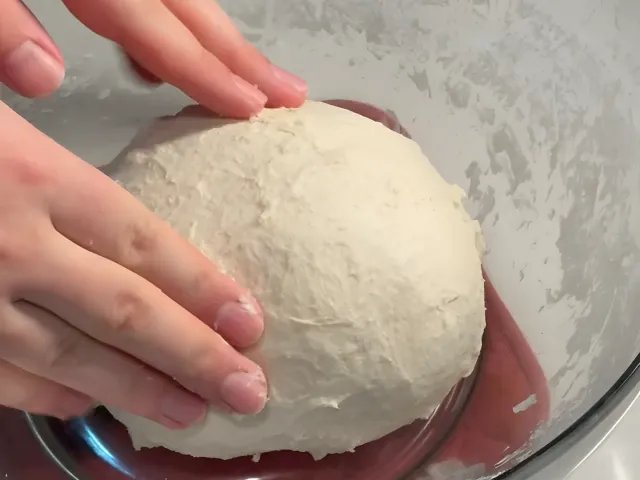
    A hand folding one side of the dough over itself in a glass bowl, the stretched dough showing its strands Two hands cupping the side of a round ball of dough in a glass bowl, tucking it underneath
  7. Let it rise

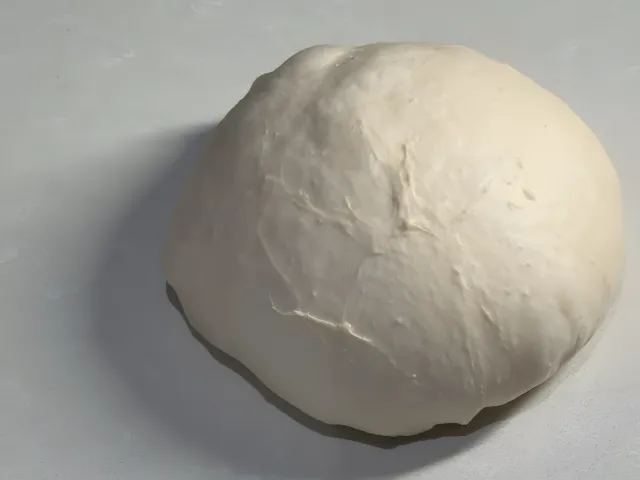
    • Cover it again and let it rise at room temperature for 2 hours.
    • It will almost double.
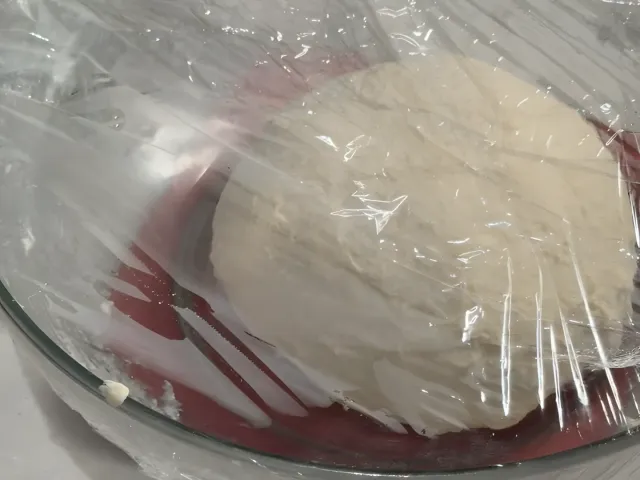
    A ball of dough in a glass bowl covered with plastic wrap, on a red mat A smooth, domed ball of dough sitting on a light grey counter
  8. Cut it into 8 pieces

    • Turn the dough out onto the counter and cut it into 8 equal pieces with a bench scraper.
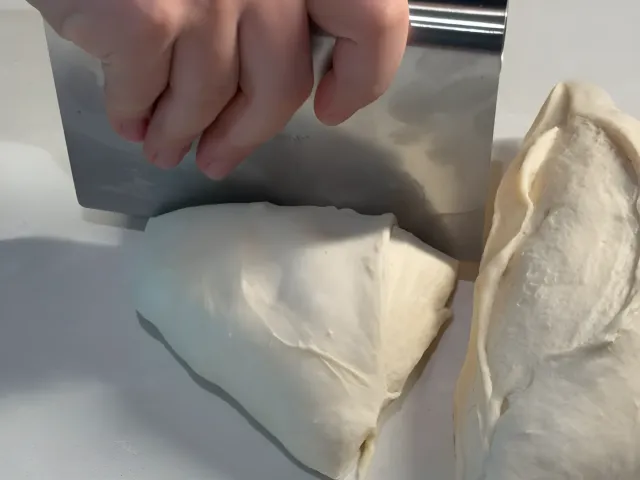
    A hand pressing a metal bench scraper down through a piece of dough on a light grey counter
  9. Round them

    • Round each piece into a ball under your cupped hand.
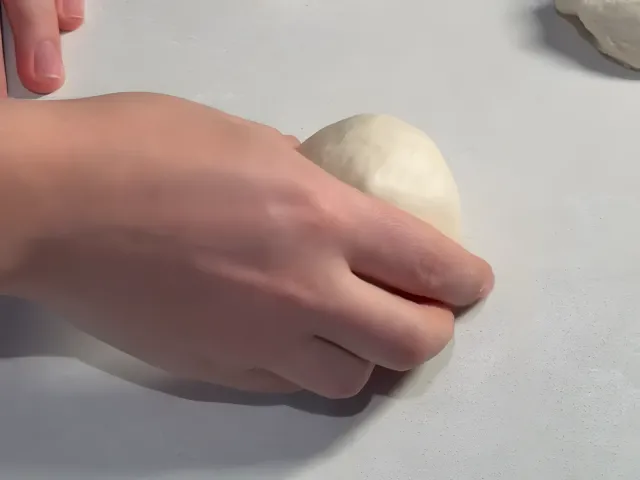
    A cupped hand rolling a piece of dough into a smooth ball on a light grey counter
  10. Shape a teardrop

    • Roll each ball under your palm into a teardrop, thick at one end and narrow at the other.
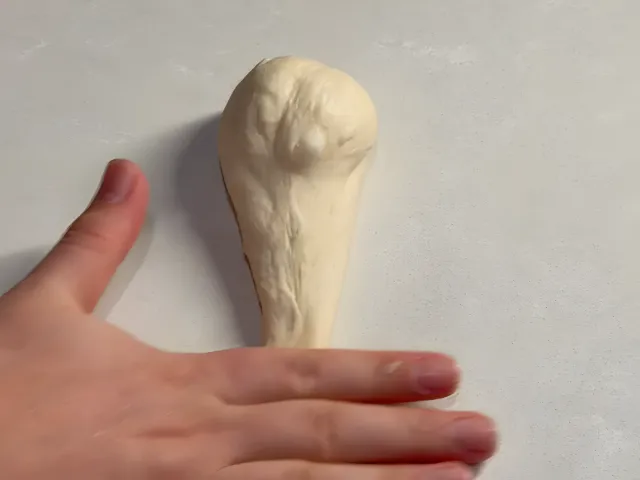
    A teardrop-shaped piece of dough on a light grey counter, with a hand beside it
  11. Roll it out

    • Roll each teardrop out with a rolling pin into a long, thin strip, wide at one end and pointed at the other.
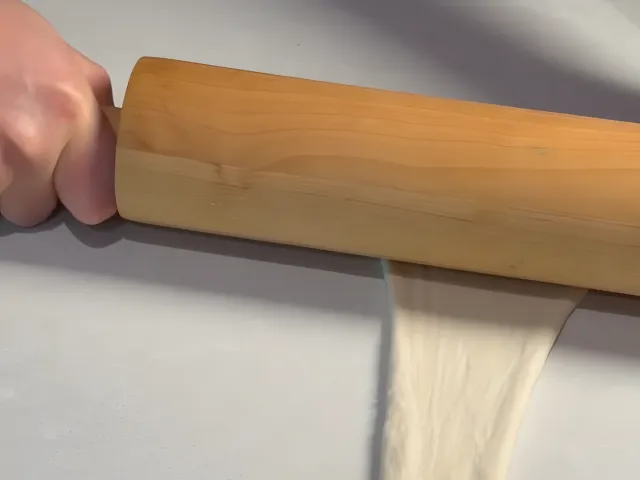
    A hand rolling a wooden rolling pin over a long strip of dough on a light grey counter
  12. Add a piece of butter

    • Put one piece of the butter at the wide end of each strip.
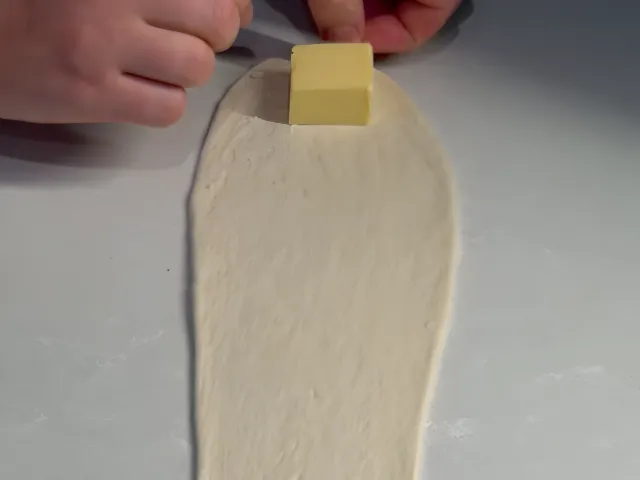
    Two hands placing a cube of butter on the wide end of a long, thin strip of dough
    • You need
    • 8 tbsp salted butter
  13. Roll it up

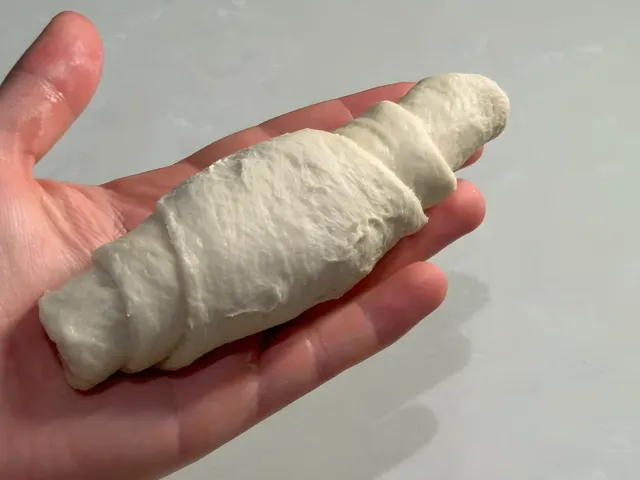
    • Roll the dough up from the wide end around the butter, all the way to the point.
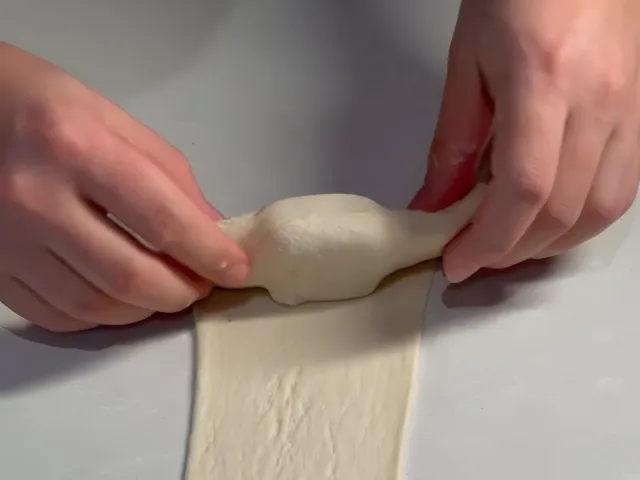
    Two hands rolling up the wide end of a long strip of dough on a light grey counter A shaped, unbaked roll with spiral layers lying on an open palm
  14. Let them rise

    • Put the rolls on a baking sheet lined with parchment paper, with space between them.
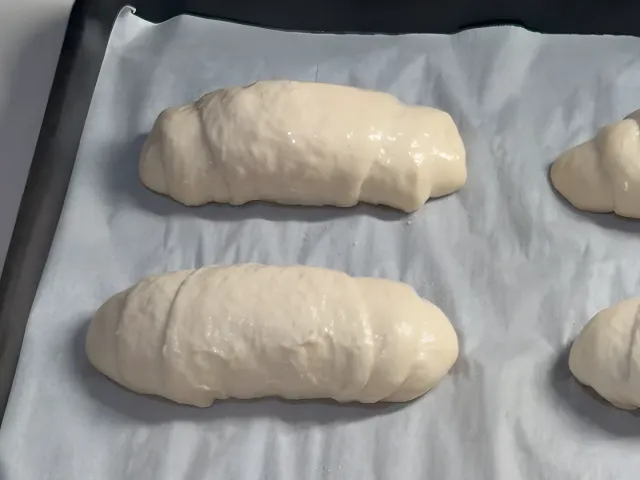
    • Let them rise for 1 hour, until they look very puffy.
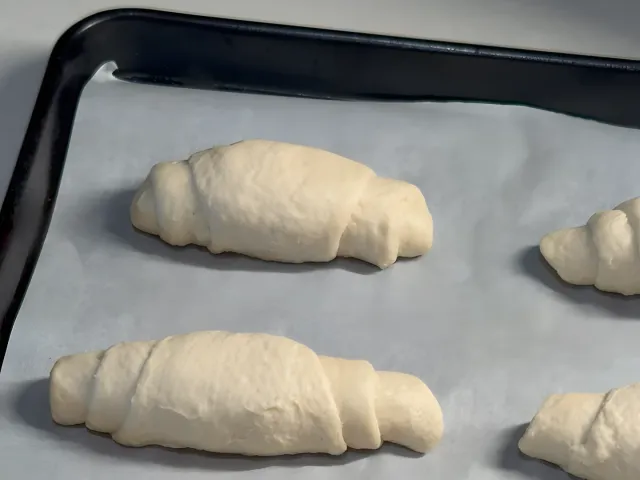
    Shaped dough rolls lined up on parchment paper in a dark baking tray, before rising Puffy risen rolls, wet on top, on crinkled parchment paper in a dark baking tray

    While they rise, heat the oven to 400°F (205°C) with convection.

  15. Water and salt

    • Spray the rolls with water. Sprinkling it on with your fingers works too, but spraying works best.
    • Then sprinkle the flaky sea salt on top.
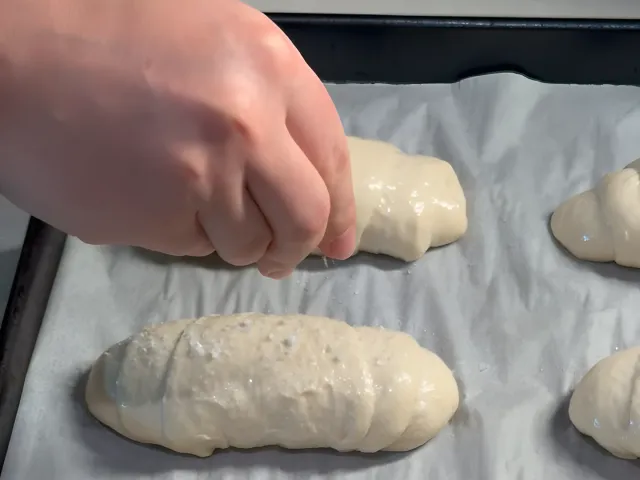
    A hand sprinkling flaky salt over risen dough rolls on a parchment-lined baking tray
    • You need
    • water
    • flaky sea salt
  16. Bake

    • Bake on the middle rack at 400°F (205°C) with convection for 15 to 20 minutes, until golden brown.
    • Some of the butter will leak out onto the tray. Leave it there, because it goes back on the rolls at the end.
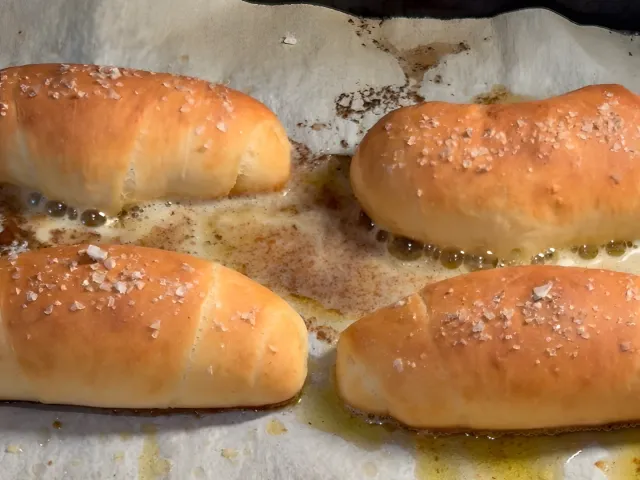
    Golden baked rolls topped with flaky salt on parchment paper, with melted butter bubbling around them
  17. Brush them with the butter

    • When they come out of the oven, brush the rolls with the butter that leaked onto the tray.
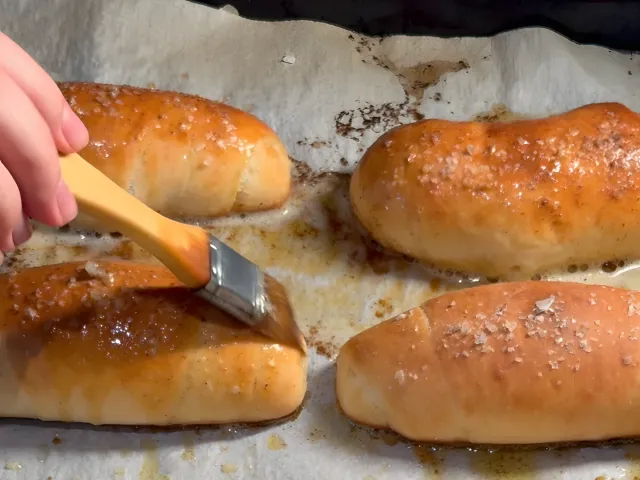
    A hand brushing melted butter onto a baked roll with a wooden-handled pastry brush, more butter pooled on the parchment

Nutrition per serving

Calories
400 kcal
Protein
9 g
Fat
17 g
Carbs
52 g
Fiber
2 g
Sugar
4 g
Sodium
715 mg

Estimated from USDA FoodData Central, without water (for spraying), flaky sea salt (for sprinkling).


Ju bëftë mirë!

Watch the video Save on Pinterest

Video

Rather watch me do it?

The whole recipe, start to finish, is on my channel. Subscribe and the next one finds you.

Questions

Questions about how to make salt bread (butter rolls)

What is salt bread?

A soft roll with a piece of butter rolled up inside and flaky salt on top. In Japan, where it started, it’s called shio pan, which means salt bread.

Is salt bread Japanese or Korean?

Japanese. Most stories put its start at Pain Maison, a bakery in Ehime Prefecture. Korea is where it really took off, and there it’s called sogeum-ppang.

Can you make salt bread without a stand mixer?

Yes. I kneaded this dough by hand, right in the bowl, for 10 to 15 minutes. A stand mixer works too, and it’s faster.

Can you make salt bread with all-purpose flour?

Yes, but the rolls come out a little softer. Bread flour makes a stronger dough with more chew. All-purpose flour also takes less water, so hold some back and add it only if the dough feels stiff.

How long does salt bread take to rise?

About 4 hours in total. One hour in the fridge, 2 hours at room temperature, then 1 more hour after shaping. The dough almost doubles, and the shaped rolls should look very puffy.

Why does the butter leak out of salt bread?

Some always leaks out, and the bottoms need it. If almost all of it ends up on the tray, the butter was too soft, or the rolls rose too long or somewhere too warm. Let them rise at normal room temperature, not in a warm oven.

How do you store, reheat and freeze salt bread?

Keep leftovers in an airtight container at room temperature for up to a day. Not in the fridge, because it makes bread go stale faster. Wrapped well, the baked rolls freeze for up to 3 months. Let frozen rolls thaw at room temperature first. Then warm them in a 350°F (175°C) oven for 3 to 5 minutes to crisp them up again.

How many calories are in salt bread?

About 400 calories per roll, with 8 rolls in this recipe, from USDA data. Most of them come from the flour and the butter.

Goes with

What else goes on the table

Your turn

Did you make it?

Your rating
Tap a diamond to rate it.

No comments yet. Be the first to tell me how it went.

Show me the inside

Take the photo and tag @xhuliocooks on Instagram so I can see how yours turned out.